
Libya’s status as a Bitcoin mining hub emerged from exceptionally cheap electricity at $0.004 per kilowatt-hour, enabling the country to capture 0.6% of the global Bitcoin hash rate and rank as the leading mining destination across Africa and the Arab world. Despite official cryptocurrency bans since 2018, legal ambiguity combined with weak enforcement and heavy fuel subsidies has allowed underground mining operations to flourish in abandoned factories across Tripoli, Misrata, and Zliten.
Key Insights
- Libya has quickly become a Bitcoin mining hub due to its extremely low electricity prices.
- The country’s relatively weak oversight has allowed mining farms to grow despite official bans.
- However, power shortages across the country have pushed authorities to launch raids and impose prison sentences for illegal miners.
Libya has become a Bitcoin mining hub that few expected. The country was once known for its oil wealth and political unrest. However, its cheap power and relatively lax mining rules later opened the door to large-scale Bitcoin mining.
This shift trend has happened quietly, and by late 2025, Libya is now ranked as the leading Bitcoin mining hub across Africa and the Arab world.
How Cheap Power Created a Bitcoin Mining Hub?
Electricity prices have been a major source of Libya’s Bitcoin mining popularity, more than any other factor.
Libya offers some of the lowest rates worldwide, and estimates place the price near $0.004 per kilowatt hour. This was made possible because of heavy fuel subsidies and how authorities keep tariffs low to avoid unrest.
Miners around the world have recognized the opportunity in this pricing and are paying far less than global averages. Even outdated machines remain profitable.
In addition, mining equipment that has been scrapped elsewhere still earns returns inside Libya, and the country sees a constant flood of old ASIC miners through informal routes.
This setup has slowly turned Libya into a Bitcoin mining hub without modern data centers, where power costs allow steady profits despite old or damaged hardware.
Libya’s Place on the Global Bitcoin Map
Libya’s mining share surprised many observers. Data from the Cambridge Centre for Alternative Finance showed that Libya reached about 0.6% of the global Bitcoin hash rate in 2021.
That figure placed Libya ahead of all Arab and African nations.
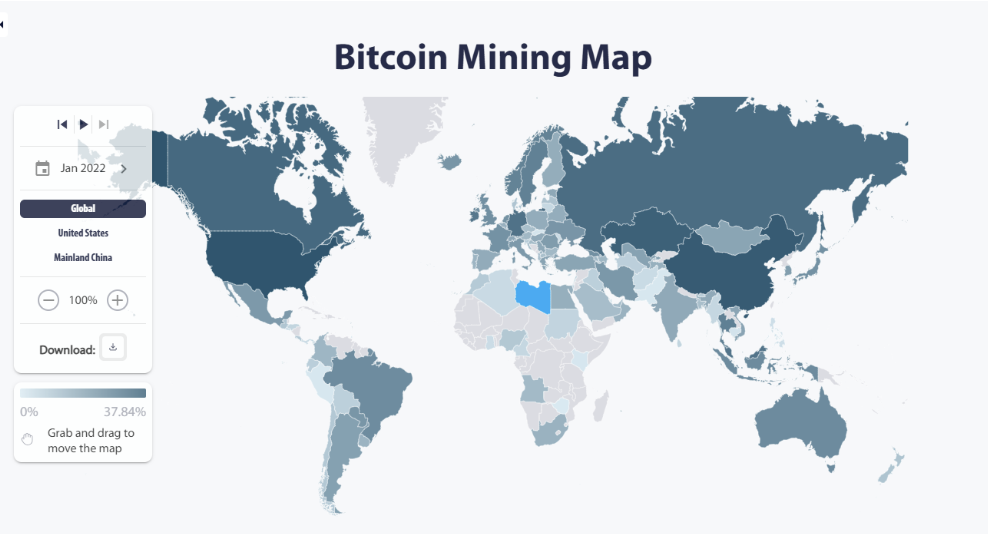
However, mining activity consumes roughly 2% of national electricity output, and annual usage reaches about 0.855 terawatt hours. This kind of demand would strain even stable grids, and Libya already suffers from years of damage.
Despite civil unrest, Libya has become a Bitcoin mining hub through scale rather than polish.
Underground Mining Farms Spread Fast
Mining operations are far larger in Libya than home setups. The country has large farms that operate inside abandoned factories and warehouses and cities like Tripoli, Misrata and Zliten now host many sites.
Foreign operators are also entering the scene, as Chinese groups arrived after China banned mining in 2021. Libya offered weak oversight and cheap power and those conditions proved attractive despite risks.
Authorities have uncovered several large farms over the years, especially after a major raid in 2023, when officials arrested 50 Chinese nationals in Misrata and Zliten.
Police found thousands of machines inside an abandoned iron factory and discovered that they planned for the long-term with cooling systems and transformers.
Legal Confusion Fuels the Bitcoin Mining Hub
Libya has an official ban on Bitcoin use and trading. The Central Bank of Libya issued the ban in 2018 as officials cited money laundering and terrorism financing risks.
Moreover, a 2022 decree banned mining hardware imports.
However, mining itself sits inside a legal gap as parliament never passed a clear law against computing Bitcoin. Instead, courts often prosecute crimes like electricity theft, smuggling or laundering funds.
Legal experts note that miners rely on slow enforcement, and this ambiguity helped Libya grow into a Bitcoin mining hub despite official warnings.
Disclaimer: This article is intended solely for informational purposes and should not be construed as financial advice. Investing in cryptocurrencies involves substantial risk, including the possible loss of your capital. Readers are encouraged to perform their own research and seek guidance from a licensed financial advisor before making any investment decisions. Voice of Crypto does not endorse or promote any specific cryptocurrency, investment product, or trading strategy mentioned in this article.