
The Ethereum Fusaka upgrade benefits include faster transaction speeds, lower fees, and expanded network capacity, enabled by PeerDAS technology that lets nodes process smaller data samples rather than full blobs. With the block gas limit increased to 60 million and improved data verification reducing validator load, rollups like Arbitrum, Optimism, and zkSync can now post more data at lower costs while maintaining security
Key Insights
- The Fusaka upgrade has gone live on Ethereum. It is expected to boost the network’s speed and raise its capacity.
- The upgrade’s PeerDAS feature lets nodes process far smaller data parts for faster checks.
- As a result, users get steadier fees, smoother apps, and better wallet activity.
The Ethereum Fusaka upgrade finally goes live. This is a major step that is expected to improve its network speed, lower fees, and give developers more room to build. The update arrived during a busy week for the crypto market and delivers changes that users will notice over the next several months.
Fusaka brings a cleaner design, lighter data checks, and stronger support for rollups that handle most activity on the chain today.
How PeerDAS Reduces Node Load and Speeds Up Data Checks
The biggest improvement in Fusaka comes from PeerDAS. Think of PeerDAS as a new data system that changes how nodes verify information. Before this update, nodes had to download full blobs of data to confirm activity. This process used system resources and slowed down block validation.
PeerDAS changes this by letting nodes check smaller pieces of each blob. These samples still give accurate verification but take far less time to process.
Nodes use fewer resources and still protect the same level of security. This change helps the entire chain run faster because each block requires less work from validators.
Rollups gain the most from this change. They post compressed batches of transactions to Ethereum, and PeerDAS raises the amount of data Ethereum can accept without strain.
The network can now handle far more rollup traffic without running into the bottlenecks that caused fee spikes in past years.
Better Block Capacity Helps Rollups Cut Fees
Fusaka also increases the block gas limit to 60 million. This gives more room for computation and activity inside every block. When paired with PeerDAS, Ethereum gains a noticeable jump in throughput. This extra space reduces congestion events that once caused unnecessary fee jumps.
This way, rollups can post more data at a lower cost, which should lead to steadier pricing for users over time. These networks like Arbitrum, Optimism, Base, zkSync and Starknet, all rely on Ethereum to settle their data.
Because of this, Fusaka helps them grow without causing new pressure on the main chain.
A new rule for blob pricing also protects the system from sudden fee spikes. The reserve price mechanism adds more stability and reduces the noise that once pushed fees up during busy periods.
What Users Will Notice Over Time
Most users do not need to install anything or change any settings. Wallets will continue to work, ETH balances will continue to be safe, and apps will function normally.
The upgrades operate behind the scenes, and the improvements show up little by little as more tools adopt the new system.
Ethereum users will notice shorter wait times during periods of heavy traffic and more stable fees on large rollups as they move to the new data model.
Other changes will see apps that handle large data loads running more smoothly and wallets that show more reliable fee estimates during busy hours.
Fusaka also improves reliability for events that used to stress the chain, like NFT mints or strong price movements.
Under Fusaka, blocks fill in a more stable way and reduce the chance of stuck transactions.
Gains for Node Operators of All Sizes
Fusaka does not only help users; it also helps the people running the network. Nodes no longer handle oversized data loads, which lowers bandwidth needs and reduces hardware strain.
Large staking providers benefit, but solo operators may feel it even more because they now need fewer resources to keep their nodes active.
This helps keep Ethereum decentralized. The network remains healthier when many independent validators can participate without expensive tools, and Fusaka makes that path easier.
In all, Fusaka has now laid the foundation for the next major update, called Glamsterdam, which arrives in 2026.
Glamsterdam is expected to offer faster confirmations, deeper fee reductions, and new tools for developers. It also expands progress toward better wallets and smoother onboarding for new users.
How Will Fusaka Affect ETH Price?
Ethereum’s price has climbed by more than 10% since the start of December, alongside most of the rest of the market.
Notably during the Pectra upgrade earlier in the year in May, Ethereum surged by more than 50% after showing a bullish divergence.
The same setup appears to be forming now between the RSI and the actual price.
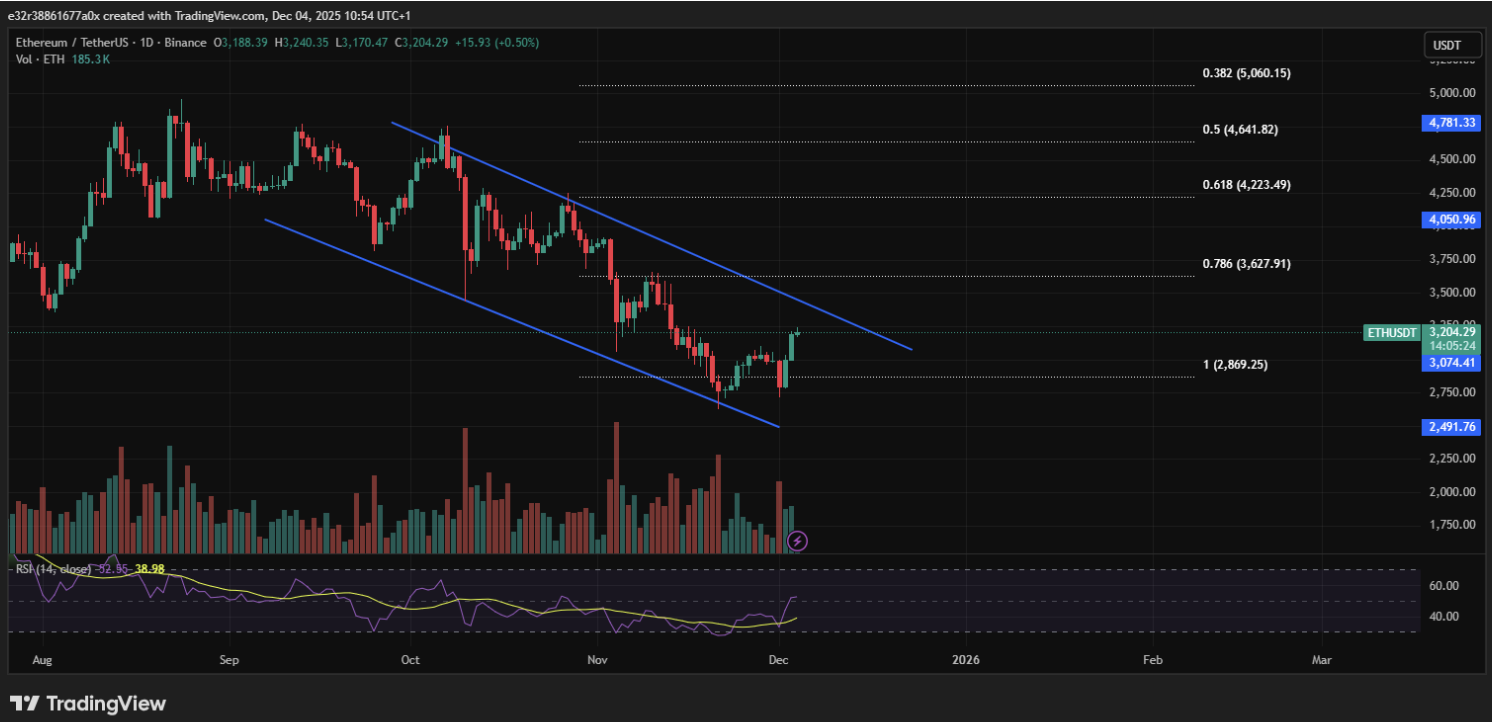
According to data from TradingView, Ethereum made a higher low around 1 December, with the RSI now attempting to make a higher high.
Ethereum is also on its way to testing the top of the descending channel shown. With this said, the bulls will need to pull off a push above the next most important resistance level around $3,627 to confirm dominance.
If Ethereum reclaims this price level, it is likely to climb further (after a retest) and attempt to reclaim the $4,000 zone once again.
Disclaimer: This article is intended solely for informational purposes and should not be construed as financial advice. Investing in cryptocurrencies involves substantial risk, including the possible loss of your capital. Readers are encouraged to perform their own research and seek guidance from a licensed financial advisor before making any investment decisions. Voice of Crypto does not endorse or promote any specific cryptocurrency, investment product, or trading strategy mentioned in this article.