
Surprisingly, Americans now own more Bitcoin than gold. This surprising shift in the trend highlights how quickly digital assets have moved into mainstream portfolios. Bitcoin’s rapid growth has changed investor preferences for a store of value compared to gold.
Key Insights
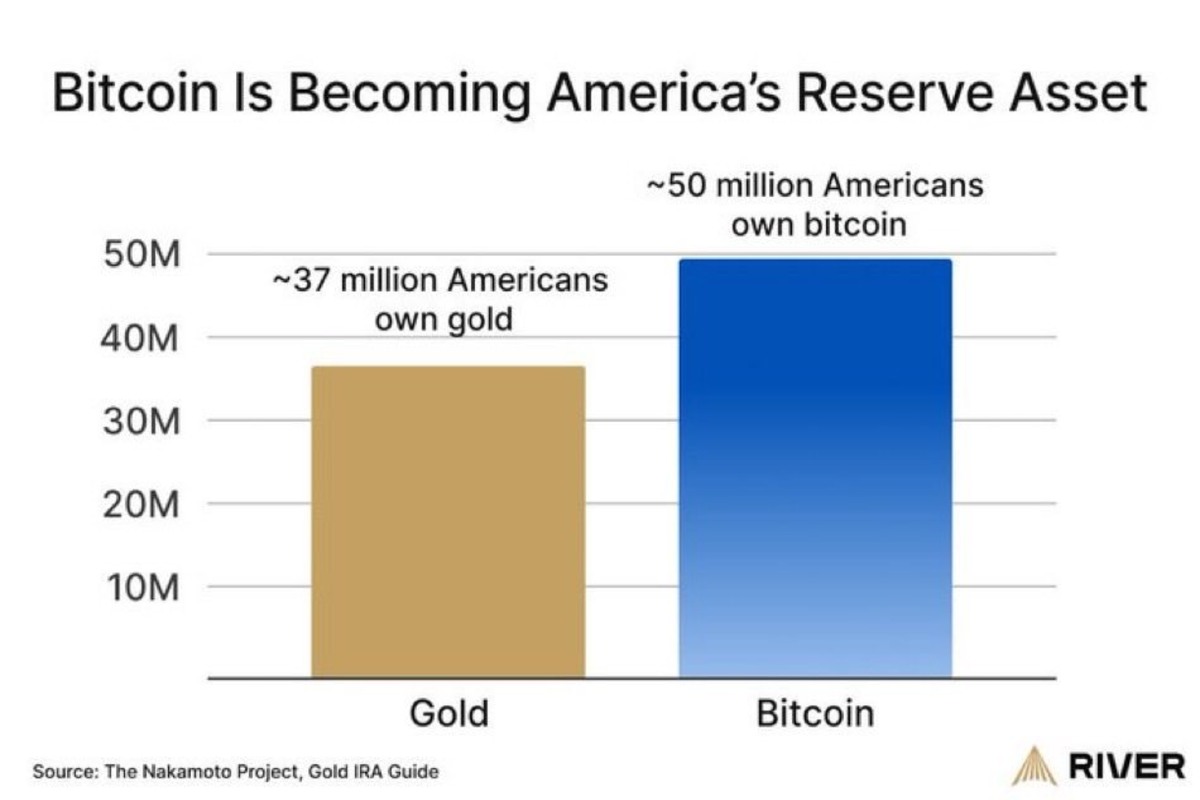
- While about 37 million Americans own gold, over 50 million Americans own Bitcoin (BTC).
- Bitcoin adoption has seen faster growth than any traditional asset.
- ETFs (exchange-traded funds), mobile apps, and the rising popularity of Bitcoin make it easy to access, which contributes to the increasing number of American investors choosing Bitcoin over traditional assets like gold.
Why Are Americans Choosing Bitcoin over Gold?
As per data from The Nakamoto Project and Gold IRA Guide compiled by River, over 50 million Americans now own Bitcoin, compared to around 37 million gold holders. The difference of 13 million indicates a significant change in the way individuals view digital assets as a means of preserving their wealth.
For ages, gold has been used for wealth preservation and still remains a leader among pension funds, conservative investors and central banks. In contrast, BTC is only 20 years old, yet it has managed to surpass gold in individual ownership, highlighting how quickly digital assets are being adopted.
Bitcoin: From Niche Asset to Mainstream Holding
Initially, developers, cryptography enthusiasts, and a small group of early investors eager to experiment with new technology owned the majority of BTC. Also, buying and storing Bitcoin required technical knowledge, which included understanding how to use digital wallets and navigate blockchain technology. and crypto exchanges had limited access; therefore, an average person found it very difficult to invest in this emerging asset class.
However, over time, we have managed to overcome all these obstacles.
Today, Bitcoin is easily accessible through mobile apps, crypto exchanges, and ETFs (exchange-traded funds, which are investment funds traded on stock exchanges). Investors no longer need deeper technical knowledge about wallets or private keys to gain exposure. This ease has been a core factor in Bitcoin adoption.
However, gold adoption grew slowly over decades through jewelry demand, savings habits, and institutional investment products, while Bitcoin has reached comparable ownership levels in a fraction of the time, largely because digital distribution allows millions of people to participate instantly.
Why Ownership Numbers Can Be Misleading
As the data says, Americans own more Bitcoin compared to gold, but that doesn’t mean Bitcoin holdings are larger in value or importance than gold holdings. This is because ownership count and allocation size are different things.
Gold ownership often involves physical bars, coins, or long-term investment funds. Many households hold gold as part of inheritance or cultural tradition, which increases the average value of each possession.
On the other hand, BTC ownership has many variations. Some hold only small amounts through apps or exchanges, while others hold large positions. As the entry cost is low, an average-earning individual can also own a fraction of a coin, which increases the ownership count without increasing the total capital invested.
If we consider institutional exposure, gold remains a leader in this scenario as central banks hold large gold reserves, and global gold funds represent decades of accumulated capital. Whereas BTC is still gaining institutional interest via exchange-traded funds, the total depth of the market is still growing.
Speed of Bitcoin Adoption Is the Real Story
The most important takeaway from the data is not that BTC has overtaken gold but how quickly it reached this point.
Traditional assets required generations to achieve this widespread ownership. But BTC has reached this stage in less than two decades. Factors like global trading access, younger investors, and digital platforms have accelerated this adoption.
Additionally, in this digital age, younger investors are more comfortable with online investments and therefore prefer BTC in their portfolios alongside stocks and funds.
A Shift in Perception, Not a Replacement
Gold is still considered the most trusted asset worldwide, as it dominates official reserves and long-term institutional portfolios, and this position is unlikely to change quickly.
However, the fact that tens of millions of Americans now hold BTC shows that the debate about whether it is a legitimate asset is fading. At this scale, consumer adoption suggests that BTC has moved beyond speculation and has entered the mainstream.
Bitcoin is emerging as a parallel store of value for a new generation of investors rather than replacing gold.
Disclaimer: This article is intended solely for informational purposes and should not be construed as financial advice. Investing in cryptocurrencies involves substantial risk, including the possible loss of your capital. Readers are encouraged to perform their own research and seek guidance from a licensed financial advisor before making any investment decisions. Voice of Crypto does not endorse or promote any specific cryptocurrency, investment product, or trading strategy mentioned in this article.